
To create a marketing plan for an aesthetic practice, write down measurable business goals, identify exactly who your ideal patient is, study your local market, define what makes your practice different, choose a short list of marketing channels you can execute consistently, assign a budget, build a calendar, train your team to convert the leads that come in, and review your numbers every month. That’s the whole plan in one sentence – but each step has details that determine whether your marketing produces booked appointments or just noise. Most aesthetic practices don’t have a marketing problem. They have a planning problem.
Below is the framework we walk clients through at Shorr Solutions.
Aesthetic medicine is an elective, cash-pay market. Nobody has to come see you – patients are choosing between you, a med spa two miles away, a competitor’s Instagram feed, and doing nothing at all.
Without a plan, marketing becomes reactive and disjointed: a social boost here, a magazine ad there, a last-minute promotion when the schedule looks thin. At year’s end, nobody can say what worked. A written plan matters for three practical reasons:
It protects your money. Marketing spend without a plan drifts toward whatever vendor called most recently. A plan decides in advance where dollars go and what result you expect from each channel.
It creates consistency. Patients often need multiple touchpoints before booking. A plan keeps you visible during busy months, not just slow ones. Our article on holiday strategy covers how to get ahead of predictable slow periods.
It ties marketing to your business goals. Marketing should support a specific revenue target, fill a specific provider’s schedule, or launch a specific service line. If it isn’t connected to your business plan, it’s decoration.
A plan is also a living benchmark. It lets you track performance, make data-driven decisions, and build a brand identity that differentiates you. We see firsthand how practices with a formal plan consistently outperform those without one – with greater profitability and long-term stability.
Work through these in order. Each step informs the next.
Start with numbers, not tactics. Vague goals like “grow the practice” can’t be measured, which means they can’t be managed. Use the SMART framework: Specific, Measurable, Achievable, Relevant, and Time-bound.
Specific goals look like:
Increase monthly consultation requests from 40 to 65
Add 15 new injectable patients per month
Increase new patient consultations for injectables by 20% in the next quarter
Fill 80% of a new provider’s schedule within six months
Increase average revenue per patient visit by 20%
Grow email newsletter subscribers by 300 within six months
Generate 50 qualified leads per month for a new body contouring device by year’s end
Then work backward. If you need 15 new injectable patients monthly and your consultation-to-treatment rate is 50%, you need 30 consultations. If 25% of leads book a consultation, you need 120 qualified leads a month. Now you know what your marketing has to produce.
Next, define who you’re marketing to. Be uncomfortably specific:
Age range and life stage. A 32-year-old preventative Botox patient and a 58-year-old facelift candidate respond to completely different messaging.
Gender. Men are a growing and underserved segment, and reaching them requires different language and imagery. See marketing to men.
Geography. Local patients respond to convenience and community presence. Travel patients respond to expertise and reputation.
Primary concerns. Write them in the patient’s words, not clinical terms. Nobody searches “glabellar rhytides” – they search “frown lines between eyebrows.”
Objections. Fear of looking overdone, downtime, uncertainty about results, not knowing what to ask for.
Build patient personas to make this tangible:
“Maintenance Molly,” a 45-year-old professional who comes in quarterly for Botox and is interested in preventative skincare.
“Bridal Brianna,” a 28-year-old planning her wedding who wants a comprehensive treatment plan for clear, glowing skin.
Everything else in your plan flows from this. Skip it, and you end up writing content for everyone – which reaches no one.
You can’t position your practice without knowing what surrounds it. Start with a SWOT analysis of your own practice:
Strengths: Specialized techniques, a provider’s unique credentials, high patient satisfaction scores.
Weaknesses: Outdated website, limited service offerings, inconsistent follow-up process.
Opportunities: A growing local population, new technology you could adopt, a competitor’s poor online reviews.
Threats: A new medspa opening nearby, economic downturn, changing aesthetic trends.
Then spend a few hours researching other aesthetic providers in your market – their services, messaging, brand voice, online activity, and reviews. Pay particular attention to:
Service overlap. If six practices all advertise the same injectable, competing on that alone is a race to the bottom. Look for services few others offer, or combinations only you provide.
Review themes. Recurring complaints across your market – long wait times, rushed consultations, hard sales pressure – are opportunities. If everyone in town feels rushed, “unhurried consultations” becomes a real differentiator.
Mid-level provider competition. Nurse injectors and med spas have expanded significantly. Our piece on mid-level competition unpacks what it means for physician-led practices.
Your own reputation. Search your practice name. If negative reviews dominate page one, no amount of ad spend will fix your conversion rate. See our guidance on negative online feedback.
Finish with an honest internal review: Which services generate the most revenue? Which have the highest margins? Which do patients love and refer for? Marketing what you’re genuinely strong at is always easier than marketing what you wish you were strong at.
Your Unique Value Proposition (UVP) answers one question: Why should a patient choose you instead of the practice down the street?
“Quality care,” “experienced providers,” and “personalized treatment plans” are not answers – every practice has those. A real UVP is specific enough that a competitor couldn’t copy and paste it onto their website. Strong differentiators usually come from:
Provider expertise: Advanced fellowship training, specialization in a complex procedure, or credentials genuinely uncommon in your market
A specific technique or specialty you’ve developed particular expertise in
A treatment philosophy patients self-select into – conservative, natural results versus dramatic transformation
Patient experience: Appointment availability, consultation length, private and personalized treatment, follow-up protocols
A proven process: A signature consultation method or unique treatment combination that delivers consistent results
A specific patient population you understand better than anyone locally
Write it as one or two sentences a patient would understand immediately. Then test it: remove your practice name, show it to five people, and see if they can tell it apart from generic marketing copy. If not, keep working.
Once you have it, it goes everywhere – website homepage, consultation script, ad headlines, email signature. A well-defined UVP is a key component of a successful business growth formula.
Now – and only now – pick your channels. Choose fewer than you think you should. Three channels executed consistently will outperform seven executed sporadically.
Your website is the digital front door to your practice. Every other channel drives traffic to it, and if it doesn’t convert, nothing else matters. At minimum, your site needs:
A clear statement of who you are and what you do, visible without scrolling
Individual pages for each major service, written for patients and optimized for the terms they actually search
Provider bios with real credentials – one of the strongest trust signals you have
Obvious calls to action on every page (“Schedule Your Consultation,” “Request an Evaluation”)
Fast load times and clean mobile performance
No broken links. Nothing undermines credibility faster than a page that doesn’t load.
For search visibility, focus on local SEO first. Fully complete your Google Business Profile, keep your name, address, and phone number identical everywhere online, build a steady flow of reviews, and publish blog content answering the questions patients ask before booking. Local search intent – “lip filler near me” or “microneedling in Coral Springs, FL” – converts far better than broad informational traffic.
For paid advertising, define the goal before you spend a dollar. Most aesthetic practices should optimize for consultation requests, not clicks or impressions. Install tracking before launch, and send paid traffic to dedicated landing pages built around a single service and a single action – not your homepage.
If you’re just establishing your online presence, our article on online presence walks through next steps.
Your patient database is the most valuable marketing asset you own, and the one most practices ignore. Existing patients already trust you, have paid you, and convert at dramatically higher rates than cold prospects.
A working email program includes:
Segmentation. Send injectable content to injectable patients, skin content to skincare patients. Blasting everyone the same message trains people to ignore you.
A consistent schedule. Monthly is a reasonable baseline; sporadic sending kills momentum.
Genuinely useful content. Treatment education, seasonal timing guidance, provider updates, practice news. If every email is a sales pitch, open rates collapse.
Subject lines worth opening. Our piece on strong e-newsletters covers this in detail.
Reactivation sequences. Patients who haven’t visited in 12+ months are your easiest wins.
Email also powers patient follow-up, where a surprising amount of unclaimed revenue sits in most practices.
Aesthetic practices are local businesses, and local relationships still produce patients. Think about where your ideal patients already spend time and money – fitness studios, hair salons, high-end boutiques, wellness businesses, dental practices, wedding planners, professional associations.
Cross-referral relationships require actual relationship-building, not a stack of brochures dropped at a front desk. Other approaches worth planning:
Educational events at your office for a small, curated group
Speaking at local organizations or community gatherings on topics within your expertise
Sponsorships and local charity events tied to organizations your patient demographic supports
Co-hosted events and cross-promotions with complementary businesses
Referral relationships with physicians who see your ideal patients for other reasons
Put these in your calendar with owners and dates. Community outreach that isn’t scheduled doesn’t happen.
Earned media builds authority in a way paid advertising can’t. When a publication quotes you as an expert, that credibility transfers to your practice.
The practical path for most practices is responding to journalist queries through platforms like Help a Reporter Out (HARO). Reporters covering beauty, wellness, and aesthetic medicine regularly need expert sources. Our article on press leads covers how to do this effectively.
A few rules determine success:
Respond fast and answer exactly what was asked
Write in plain language a general audience understands
Never pitch your practice when a reporter asked for education
Once featured, put those mentions on your website and in your email footer – media logos are among the strongest trust signals you can display
Decide what you’re spending before you start spending it. A common rule of thumb for established practices is 5–10% of gross revenue; new practices or those in a high-growth phase may need 15–20%.
Break the figure into categories so you know where money goes:
Website hosting, maintenance, and SEO
Content creation (blog writing, video production, photography and creative assets)
Paid advertising
Email marketing software
Printed materials (brochures, business cards)
Event sponsorships and community outreach
Staff time dedicated to marketing activities
A reserve for testing
Two budgeting principles matter most:
Protect the reserve. Keep a portion uncommitted for testing new channels and messages. You can’t learn what works without spending on things that might not.
Fund consistency over intensity. A sustained modest spend across twelve months almost always outperforms two big quarterly pushes with silence in between.
Track every dollar so you can measure ROI accurately. Our financial guidance services often help practices uncover hidden costs and reallocate funds to more effective channels. For broader thinking, see where you should spend money.
Your calendar is what converts your plan from a document into activity. Build it 90 days out at minimum, mapped against your practice’s natural rhythms – when demand rises, when it drops, and which treatments require lead time before an event or season.
For each month, specify:
The featured service or theme (e.g., “Summer Skin Protection” in June, “Holiday Glow-Up” in November)
Blog or educational content – one or two articles per month, with dates
Emails going out, with target segments and specific calls to action
Social content by format and cadence – educational posts, service highlights, practice culture
Ad campaigns running and what they’re promoting
Events, partnerships, or outreach activities
Who owns each item
That last point is the one practices skip and then regret. Marketing that belongs to “the team” belongs to nobody.
If you’re running promotions, structure them to attract the patients you want rather than the ones who only respond to a deal. Our guidance on discounts and specials covers how to do this without damaging your positioning.
This step determines whether your marketing plan actually produces revenue – and it’s the one most practices leave out entirely.
Marketing generates a phone call, a form submission, a DM. What happens next is a conversion problem, not a marketing problem. If your front desk lets calls go to voicemail, takes eight hours to respond to a lead, or can’t confidently explain your services, you’re paying to generate opportunities and then throwing them away.
Train your team on:
Phone and inquiry handling. Every new patient call should follow a consistent structure that captures contact information, understands the concern, communicates value, and books an appointment. Speed of response is one of the strongest predictors of conversion.
Consultation conversion. Whoever conducts consultations must identify what the patient actually wants, present options clearly, address hesitation without pressure, and ask for the commitment.
Lead follow-up. Patients who don’t book on first contact usually aren’t lost – they aren’t ready. Build a defined follow-up sequence and hold someone accountable.
Consistent messaging. Your value proposition should sound the same from your website, your provider, and your receptionist.
Skills fade without reinforcement, and staff turnover means training has to be an ongoing system – which is why we built our sales training around continuous development rather than one-time workshops. Dedicated programs like our Sales Training for Your Staff and the Conversion Cascade 2.0 Sales Training Online Course turn your team from passive employees into active participants in growth.
A marketing plan you don’t measure is a wish list. Building measurement in from the start separates a plan that improves over time from one that repeats the same mistakes.
Track a small number of metrics that connect directly to revenue. Vanity metrics – follower counts, likes, impressions, page views – feel good and tell you almost nothing. The numbers that matter:
Leads by source. How many inquiries came from search, paid ads, social, referrals, and email? Without attribution, you can’t allocate budget intelligently.
Cost Per Lead (CPL). How much does it cost to generate one new inquiry?
Lead-to-consultation rate. A low rate points to a follow-up or phone-handling problem, not an advertising problem.
Consultation-to-treatment rate. This is a training and consultation-process metric.
Customer Acquisition Cost (CAC) by channel. Not cost per click or cost per lead – cost per patient who is actually treated.
Average revenue per patient. Rising numbers here often reflect stronger consultations rather than more marketing.
Patient Lifetime Value (LTV). Total revenue a typical patient generates over the entire relationship.
Retention and repeat visit rate. Aesthetic profitability lives in repeat treatment. If patients come once and disappear, growth will always be expensive.
Reactivation results. How many dormant patients returned after outreach?
Set up infrastructure before campaigns launch: proper analytics and tracking codes on your website, conversion tracking on ad platforms, call tracking where it makes sense, and a consistent way to record lead source in your booking system or CRM. Front desk staff need the habit of asking and logging how each new patient found you.
Review these monthly. Not annually – monthly.
Optimization is a discipline, not an event. Build a standing monthly review into your calendar with the same seriousness as a financial review. In each review, ask:
What outperformed? When a content format, service message, or offer works, do more of it immediately and allocate more budget. Practices are often slower to double down on winners than to cut losers.
What underperformed, and why? Separate the channel from the execution. A campaign might fail because the platform was wrong, the landing page was weak, or nobody followed up on the leads. The fix differs in each case – and if you can’t fix it, cut your losses and reinvest elsewhere.
Where is the biggest leak? Look at your funnel end to end. If you’re generating plenty of leads but few consultations, more advertising makes the problem worse. Fix the narrowest point first.
What should we test next? Keep one or two active tests running at all times – a new subject line, a different ad headline, an alternate CTA, a new content format.
Your data tells a story. It might reveal that Instagram ads generate cheap leads that rarely convert, while SEO-driven blog content brings fewer but far more qualified patients. Give changes enough time to produce meaningful data – reacting to two weeks of numbers creates churn, not progress – but once a trend is clear, act decisively.
Knowing how to create a marketing plan for an aesthetic practice comes down to a repeatable sequence: set measurable goals, define your ideal patient precisely, understand your local market, articulate a differentiator a competitor couldn’t, choose a small number of channels you’ll execute consistently, fund them deliberately, schedule the work with owners and dates, train your team to convert what your marketing produces, and review the numbers every single month.
Skip the training and measurement steps, and you’ll spend money without knowing what it bought. Include them, and your marketing becomes a predictable engine for growth that gets stronger every quarter.
Ready to build this out for your practice? Shorr Solutions offers a Marketing Foundations Program, email marketing support, sales training for your team, and one-on-one coaching designed around aesthetic practice growth.
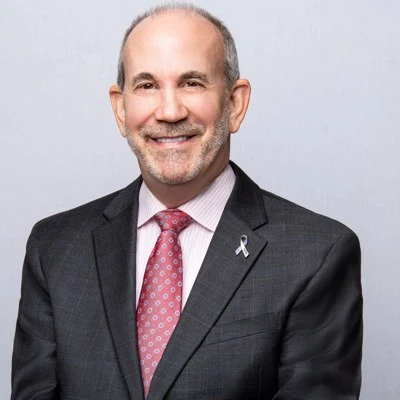
About the Author
Jay Shorr
Jay Shorr is the CEO and Founder of Shorr Solutions, an award-winning practice management consulting firm for aesthetic medical practices. A former owner of one of South Florida’s top cosmetic dermatology and plastic surgery practices, Jay helps practice owners grow through marketing, sales training, and day-to-day operations.
September 27, 2026
Actionable insights for aesthetic practice leaders.
By submitting this form you consent to receive newsletters and marking communications from Shorr Solutions.